
Introduction
The Ageing-Autism Project, funded by the EU (Erasmus+) and led by FPDA (Federação Portuguesa de Autismo), operates in collaboration with HAMK UAE Finland (Häme University of Applied Sciences) and FM Spain (Fundación Miradas). Through this partnership, we have identified a significant gap between the growing needs of older autistic adults and the support services currently available. To ensure that autistic individuals can age with dignity, professionals in social care, healthcare, and education must shift their approach from reactive measures to proactive, long-term support.
Survey Results: Insights from Three Stakeholder Groups
Transitioning into older age presents unique and critical challenges for people on the autism spectrum and the systems designed to support them. To better understand these needs,
A standardized survey was conducted across all partner countries—Finland, Portugal, and Spain—targeting three core stakeholder groups: individuals on the autism spectrum, their family members, and support professionals.
While the project is a joint international effort, this publication focuses specifically on the survey results gathered from the Finnish participants. The primary aim of this data collection was to define a comprehensive professional profile, identifying the essential skills and knowledge required to foster an active and dignified ageing process for the autistic community.
Understanding the Client’s Reality:
To effectively support older autistic adults, it’s important to recognize their specific worries and health issues.
Psychological Safety:
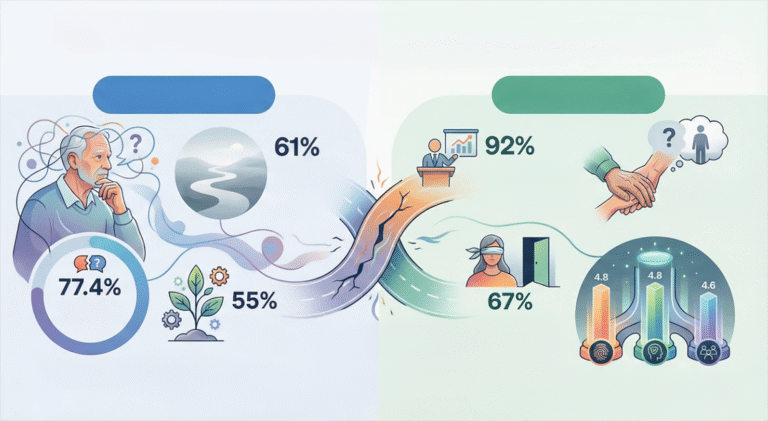
A large percentage (77.4%) of autistic individuals worry
about being misunderstood or mistreated by service providers, which leads to a general distrust of these systems.
Health Priorities:
Professionals recognise mental health support (90.9%) and cog-nitive support (90.9%) as the most critical areas for intervention as clients age.
Skill Maintenance:
While many clients fear losing their abilities (58.1%), a majority (54.8%) remain motivated to learn new things. This suggests that “lifelong learning” should be an integral part of their care plans.
Actionable Strategies for Professionals
The Survey outlines several practical steps to enhance service quality for ageing autistic adults.
Proactive Contingency Planning:
Instead of simply reacting to crises, professionals should work with families to develop contingency plans. These plans should help facilitate significant life transitions, such as changes in living arrangements or the loss of a primary caregiver.
Developing “Soft” Skills:
In addition to clinical knowledge, professionals need to develop strong empathy and the ability
to “listen between the lines.” This approach will help them respect each client’s unique communication style.
Addressing the Training Gap:
Currently, only 8% of professionals feel sufficiently trained in all areas related to autism and aging. It is crucial to implement mandatory specialized training focused on age-related health and cognitive support.
Peer Support and Supervision:
With 55% of staff expecting an increase in their workload, access to clinical supervision and coaching is essential to prevent burnout.
Supporting the Family Unit
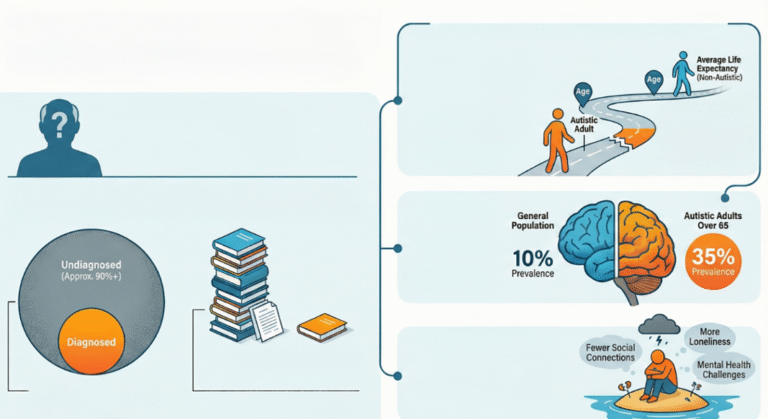
Families of ageing autistic adults often face significant challenges in accessing services and worry about the future safety of their loved ones once they are gone. Reducing barriers, such as rigid diagnostic requirements for seniors, is a crucial systemic change needed to support these families.
Summary
Ageing autistic adults face unique challenges, including fears of misunderstanding and mistreatment, mental health concerns, and worries about losing skills. The current service system is not fully prepared to meet these needs. Professionals are encouraged to adopt proactive strategies, such as contingency planning and specialised training, and developing empathetic communication skills. Supporting families by reducing systemic barriers is also essential. By implementing these recommendations, the quality of life for ageing autistic individuals can be significantly improved. The goal is to shift from reactive support to a proactive and individualized approach.
Conclusion
The Ageing-Autism Project’s findings underscore the importance of proactive, empathetic, and well-trained support for ageing autistic individuals. By embracing lifelong learning, contingency planning, and family-centered approaches, professionals can help ensure a dignified and fulfilling old age for this population.