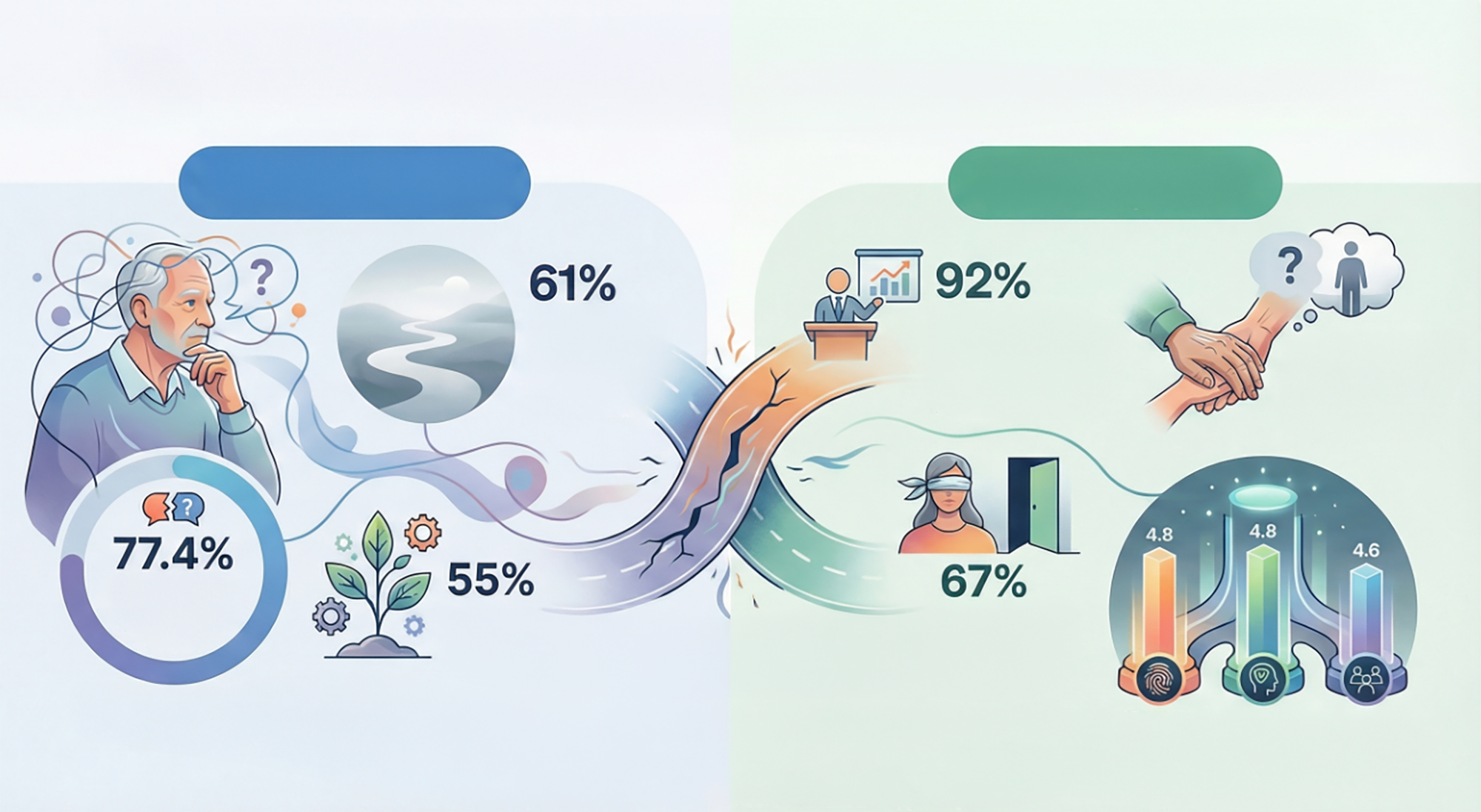
Aging with autism – Bridging the gap in care and support.
The professional gap (N=12)
Professionals acknowledge significant knowledge caps in supporting older autistic adults.
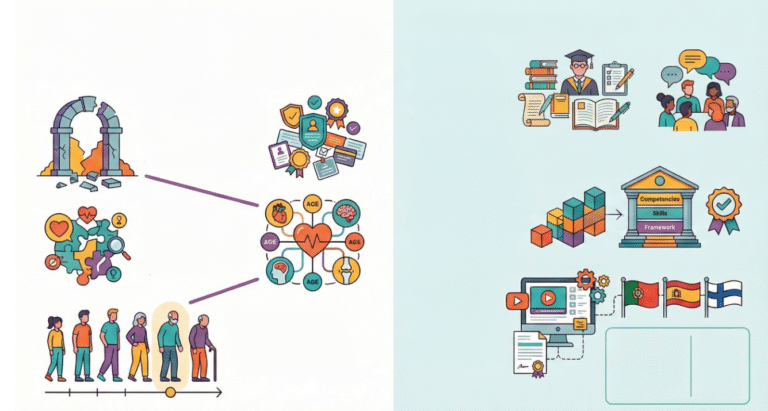
- The training crisis. Only 8% of professionals have received comprehensive training across all areas of aging and autism.
- Training needs: Focus on mental health of the elderly and neurobiological changes.
- Workload: 55% anticipate their mental and physical burden with increase.
Roadmap to better care (key recommendations)
To ensure dignity and safety, the following reforms are essential:
- Specialized training: Mandatory modules on autism and aging.
- Proactive protocols: Joint contingency plans for major life transitions.
- Empathy-led support column. A model that honors autonomy and provides flexible assistance.
- Systemic access: Removing bureaucratic hurdles and diagnosis requirements for elderly care.