Ageing in autistic populations is severely under-researched. Existing evidence shows that middle-aged and older autistic people face poorer outcomes, higher health risks, and lower quality of life compared to their peers.
An Unseen Population & Research Gap
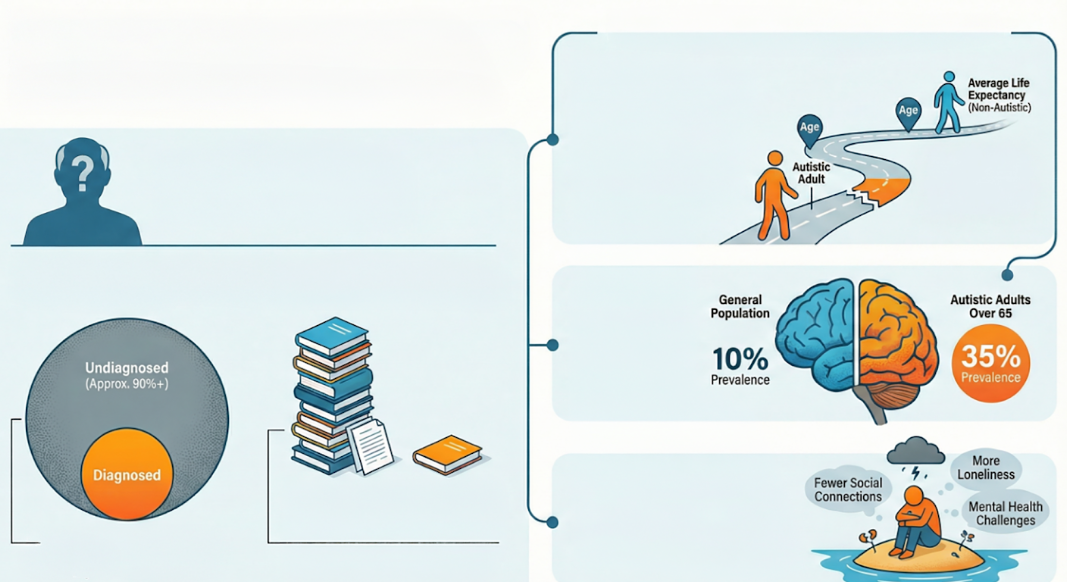
Over 90% of autistic adults over 50 may be undiagnosed
Only 0,4% of autism research focuses on midlife or older age.
Diagnosis rates drop dramatically in older age, suggesting a large, historically overlooked population.
Since 1980, over 34,000 studies focused on childhood, while only 174 focused on old age.
Major challenges for aging autistic adults
Higher mortality rates & reduced life expectancy: Autistic adults without intellectual disability die approximately 6 years earlier than their non autistic peers.
Significantly increased risk of dementia: Dementia prevalence may reach 35% in autistic adults over 65, versus 10% in the general population.
Lower quality of life & greater social isolation: Older autistic adults report fewer social connections, more loneliness, and consistent challenges with mental health.
Fewer Social Connections
More loneliness
Mental Health Challenges